
physical security plan
This project was completed for a fictional hospital to gain a better understanding of the systemics of a physical security plan. The goal was to recommend security measures for different sections of the facility, including its exterior, lobby, and maternity unit. In addition, suggestions were made regarding the importance of employee security training.
-
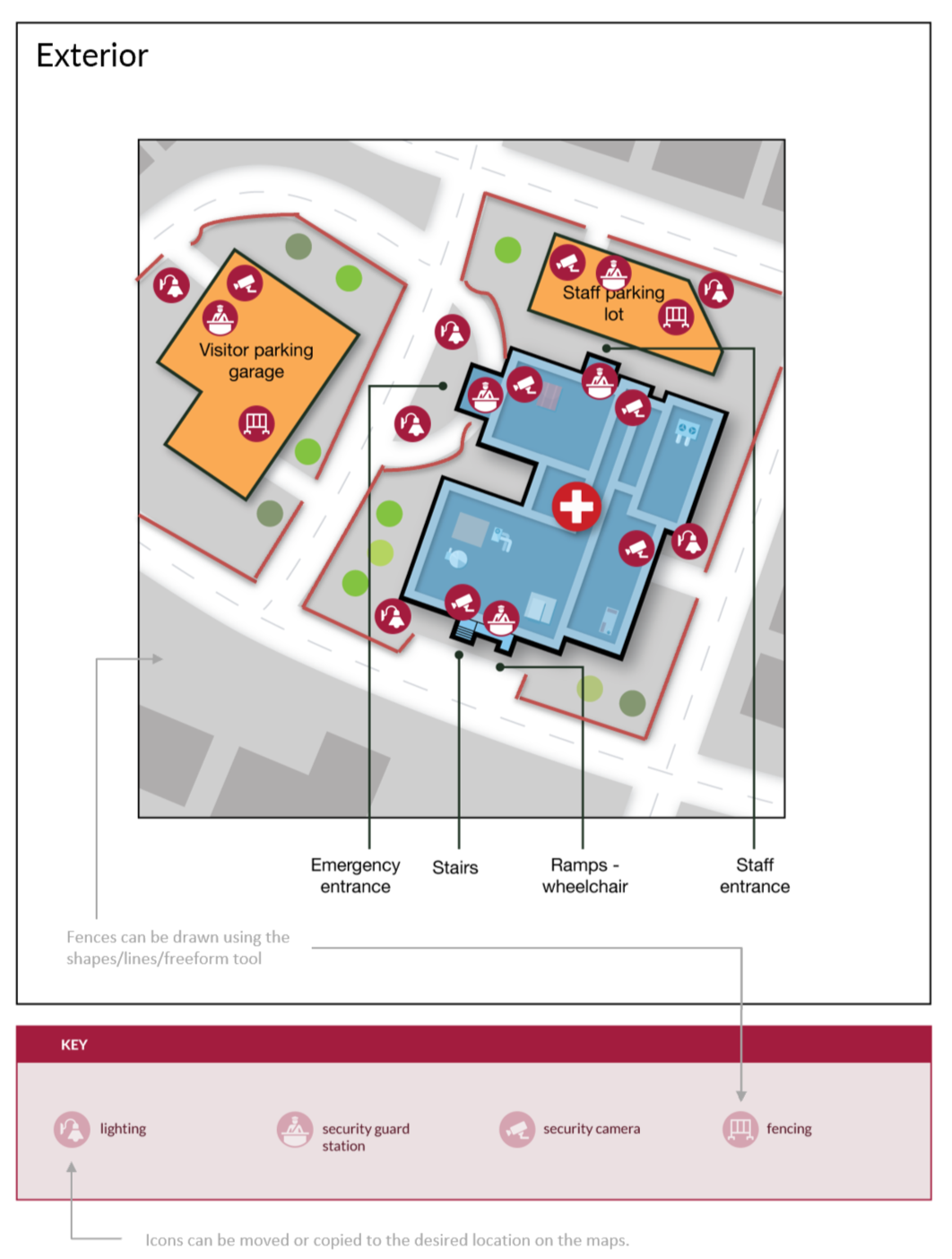
Lighting:
Lighting was placed at the entrance/exit of the visitor parking garage and the staff parking lot as well as the back entrance/exit, the side entrance/exit, and opposite sides of the front entrance/exit.
It was proposed at entrances and exits to promote visitor, staff, and patient safety.
Furthermore, lighting was placed specifically where trees or other landscaping would not conceal it.
Parking Lots:
As it relates to the parking lots, security guard stations were implemented to screen incoming patrons.
For additional security, fencing was placed around each parking lot.
Cameras:
Cameras were placed at every entrance and exit.
They were placed there to capture everyone entering and leaving the hospital grounds.
Additionally, they were employed in the event there is cause for the recounting of an incident.
-
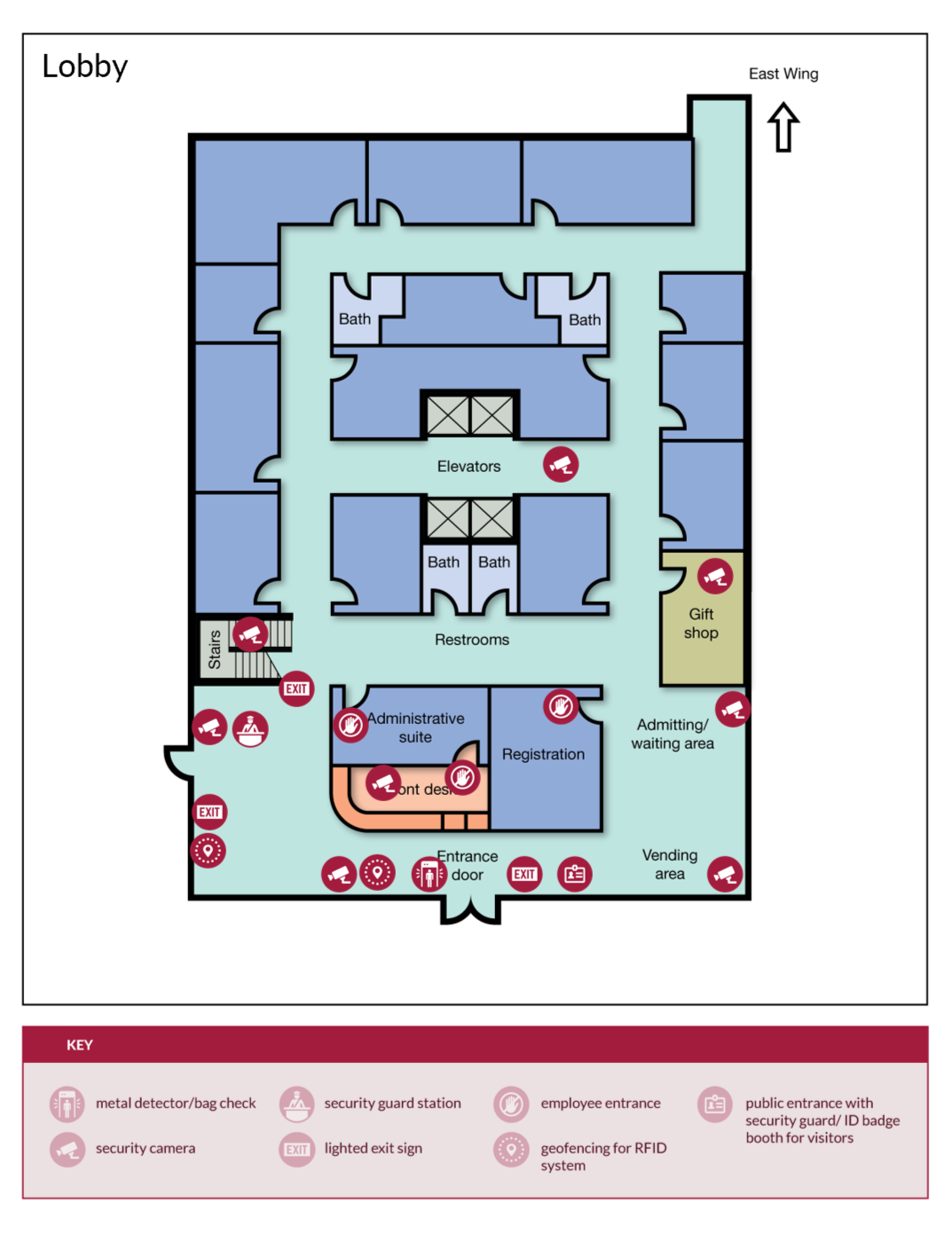
Access Control:
The windows in the lobby are required to be made of shatterproof glass.
Regarding access control for visitors, there is a deployment of a public entrance with a security guard/ID badge booth to ensure only authorized persons enter the building, thereby preventing tailgating.
At this same entrance/exit, there is a metal detector/bag check as well as geofencing for the RFID system to prevent the abduction of babies.
There is another exit and at this exit, there is also geo-fencing, in addition to a security guard station to monitor door traffic.
This can also prevent undischarged patients from leaving.
More access control is provided in the form of employee-only entrances at the front desk, the administrative suite, and registration to separate employee areas from visitor and patient areas.
-
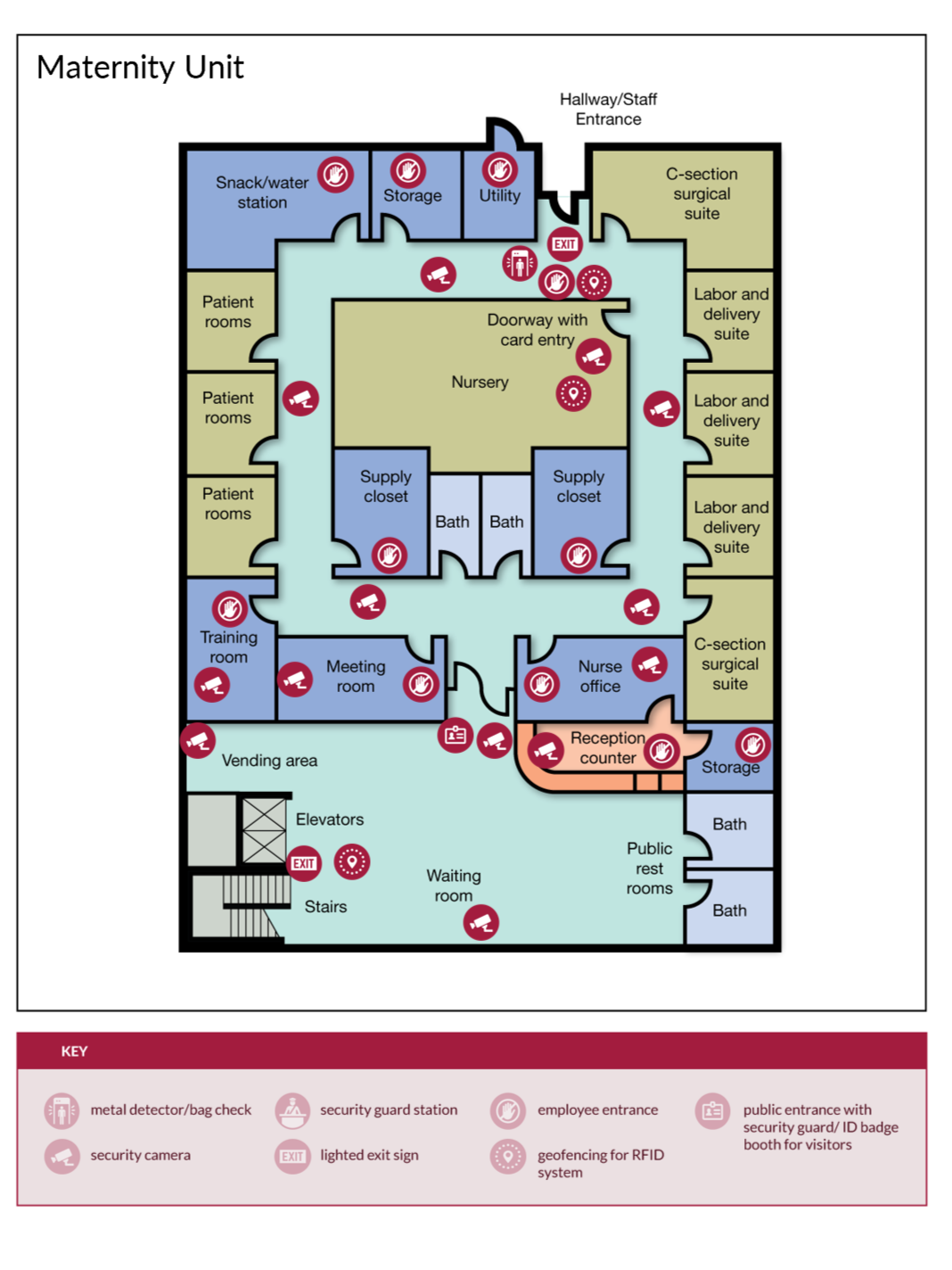
Nurses’ Station:
The nurses’ station is important as it provides an avenue for nurses to privately handle confidential information.
Designated Areas:
Visitors are encouraged to follow signage and stay in designated areas for their own safety and for the safety of staff and patients.
Visitors in unauthorized areas may obstruct medical procedures, tamper with medical equipment and files, or harm personnel and patients.
Newborn Protection:
To prevent abduction and the accidental switching of babies, geo-fencing is employed.
Geofencing uses GPS or RFID, in this case, to establish geographical boundaries.
The goal of this application is to alert persons nearby by triggering alarms once the geofence is crossed.
In the case of babies, a RFID system in the form of a radio transmitter is attached to a baby’s tag.
Exits are checked electronically and alarms go off if a baby is being abducted or not where they should be.
Secondary Badges:
Secondary ID badges should be recommended for maternity ward employees to verify authorization and to fortify the prevention of abduction.
This is salient as it is easier to abduct a baby than an adult without getting caught.
-
Employees would be offered security training every 4-6 months to keep them updated on how to approach security and new practices that may come into play.
The training would be categorized by departments since different departments or job roles face threats that are more high risk than others.
This training would entail phishing tests, compliance, password security, insider threats, fraud, and data encryption, etc.